<?xml version="1.0" encoding="UTF-8"?>
<!--Generated by Squarespace V5 Site Server v5.13.158 (http://www.squarespace.com) on Wed, 22 May 2013 11:53:22 GMT--><feed xmlns="http://www.w3.org/2005/Atom" xmlns:dc="http://purl.org/dc/elements/1.1/"><title>Case Studies</title><subtitle>Case Studies</subtitle><id>http://www.novasim.com/case-studies-journal/</id><link rel="alternate" type="application/xhtml+xml" href="http://www.novasim.com/case-studies-journal/"/><link rel="self" type="application/atom+xml" href="http://www.novasim.com/case-studies-journal/atom.xml"/><updated>2013-01-07T18:14:13Z</updated><generator uri="http://five.squarespace.com/" version="Squarespace V5 Site Server v5.13.158 (http://www.squarespace.com)">Squarespace</generator><entry><title>Children's Hospital of Pittsburgh of UPMC</title><category term="Human Services Delivery"/><id>http://www.novasim.com/case-studies-journal/childrens-hospital-of-pittsburgh-of-upmc.html</id><link rel="alternate" type="text/html" href="http://www.novasim.com/case-studies-journal/childrens-hospital-of-pittsburgh-of-upmc.html"/><author><name>NovaSim</name></author><published>2010-11-08T20:05:52Z</published><updated>2010-11-08T20:05:52Z</updated><summary type="html" xml:lang="en-US"><![CDATA[<h3><strong><strong><a href="http://www.post-gazette.com/multimedia/?videoid=101841" target="_blank">Watch Video1</a></strong></strong></h3>
<p><strong><br /></strong></p>
<h3><strong><a href="http://www.novasim.com/storage/case-studies/NovaSim_CHP_CaseStudy.pdf" target="_blank">Download PDF</a></strong></h3>
<p>The Children&rsquo;s Hospital of Pittsburgh of UPMC (CHP) had a unique and once-in-a-career problem; how to move 152 children the two and a half miles to its new state-of-the-art facility in a single day, without sacrificing patient safety and without breaking the budget. This was not just a simple matter of shuttling ambulances back and forth. While the problem is simple to describe, there were deceptively complex logistical challenges to address, including the coordination of over 250 staff members, 35 ambulances and scores of specialized, shared pieces of medical equipment. Even elevators had to be considered in the final analysis.</p>]]></summary></entry><entry><title>Pharmaceutical Order Processing</title><category term="Customer Service Improvement"/><category term="Human Services Delivery"/><id>http://www.novasim.com/case-studies-journal/pharmaceutical-order-processing.html</id><link rel="alternate" type="text/html" href="http://www.novasim.com/case-studies-journal/pharmaceutical-order-processing.html"/><author><name>NovaSim</name></author><published>2009-10-06T22:35:08Z</published><updated>2009-10-06T22:35:08Z</updated><content type="html" xml:lang="en-US"><![CDATA[<h2>Caremark PCS (Formerly Advanced PCS)</h2>
<p><span class="full-image-float-left ssNonEditable"><span><img style="width: 300px;" src="http://www.novasim.com/storage/case-studies/iStock_Pharmal.jpg?__SQUARESPACE_CACHEVERSION=1254869021656" alt="" /></span></span>The pharmacy benefits group for Caremark looked to simulation to help improve customer service and reduce turnaround time on prescription orders.</p>
<p>Orders arrive to the central processing location in Scottsdale, AZ via telephone, fax, internet, and mail. Each order can then proceed through one of hundreds of possible paths depending on the type of order, the source, if it is a refill or new prescription, and other random factors. Each path will contain anywhere from 4 to15 steps. At each step the order must be processed, and delays may occur.&nbsp;</p>
<p>The sheer volume and complexity of the orders made capacity planning and staffing very difficult. Simulation has helped reduce order turnaround time, improve staff utilization, and reduce costs.</p>]]></content></entry><entry><title>Blending and Packaging Challenges</title><category term="Food &amp; Beverage"/><category term="Materials Handing"/><category term="Process Industry"/><category term="Resource Management"/><id>http://www.novasim.com/case-studies-journal/blending-and-packaging-challenges.html</id><link rel="alternate" type="text/html" href="http://www.novasim.com/case-studies-journal/blending-and-packaging-challenges.html"/><author><name>NovaSim</name></author><published>2009-10-06T21:37:42Z</published><updated>2009-10-06T21:37:42Z</updated><summary type="html" xml:lang="en-US"><![CDATA[<h3>Unilever (<a href="http://www.wish-bone.com" target="_blank">Wish-bone</a> and <a href="http://www.lawrys.com/" target="_blank">Lawry's</a>)</h3>
<p><span class="full-image-float-right ssNonEditable"><span><img style="width: 300px;" src="http://www.novasim.com/storage/case-studies/iStock_Bottling.jpg?__SQUARESPACE_CACHEVERSION=1254866640736" alt="" /></span></span></p>
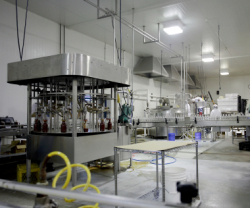
<p>Over the course of a long partnership with Unilever's in-house industrial engineers, NovaSim has developed multiple discrete event simulation models to help optimize production performance.&nbsp;</p>
<p><strong>Project Objectives</strong></p>
<ul>
<li>Determine whether the ingredient preparation system could keep up with increased production, while considering the handling of Kosher ingredients</li>
<li>Create efficient production schedules to meet demand while minimizing losses due to changeovers and equipment availability contraints</li>
<li>Manage dedicated equipment while simultaneously meeting all product demands</li>
<li>Coordinate the batch production and the complex system of ingredient scales with fork lift delivery, pumps, mixers, and packaging lines</li>
</ul>]]></summary></entry><entry><title>Creamy or Crunchy?</title><category term="Capacity Planning"/><category term="Food &amp; Beverage"/><category term="Planning and Scheduling"/><category term="Process Industry"/><id>http://www.novasim.com/case-studies-journal/creamy-or-crunchy.html</id><link rel="alternate" type="text/html" href="http://www.novasim.com/case-studies-journal/creamy-or-crunchy.html"/><author><name>NovaSim</name></author><published>2009-10-06T19:30:53Z</published><updated>2009-10-06T19:30:53Z</updated><summary type="html" xml:lang="en-US"><![CDATA[<h3>Unilever (<a href="http://www.novasim.com/display/admin/www.peanutbutter.com" target="_blank">Skippy Peanut Butter</a>)</h3>
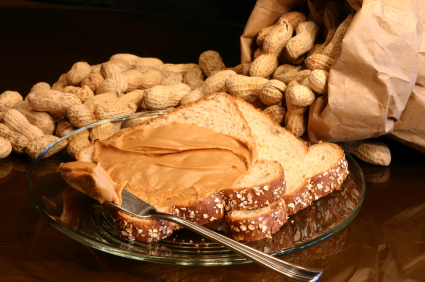
<p><span class="full-image-float-right ssNonEditable"><span><img style="width: 250px;" src="http://www.novasim.com/storage/case-studies/iStock_Peanuts.jpg?__SQUARESPACE_CACHEVERSION=1254858310617" alt="" /></span></span>The Skippy family of peanut butter includes six different products that are packaged in more than 50 different products for sale around the world. NovaSim worked with Unilever's industrial engineering team to develop a SIMUL8 discrete event simulaiton model that was used to optimize overall production performance for the Skippy brand.&nbsp;</p>]]></summary></entry><entry><title>Batch Production</title><category term="Capacity Planning"/><category term="Food &amp; Beverage"/><category term="Planning and Scheduling"/><category term="Process Industry"/><category term="Setup Time"/><id>http://www.novasim.com/case-studies-journal/batch-production.html</id><link rel="alternate" type="text/html" href="http://www.novasim.com/case-studies-journal/batch-production.html"/><author><name>NovaSim</name></author><published>2009-10-06T19:16:52Z</published><updated>2009-10-06T19:16:52Z</updated><summary type="html" xml:lang="en-US"><![CDATA[<h3>Unilever (<a href="http://www.bestfoods.com/" target="_blank">Best Foods Mayonnaise</a>)</h3>
<p><span class="full-image-float-right ssNonEditable"><span><img src="http://www.bestfoods.com/images/product/bestfoods_real_main.jpg?__SQUARESPACE_CACHEVERSION=1254856677052" alt="" width="121" height="121" /></span></span>We have all seen recipes for mayonnaise. The ingredients are very simple: eggs, vegetable oil, maybe some lemon juice, vinegar, salt and pepper. If you set your mind to it, it would be a simple matter to make up a batch in your kitchen. But what if you needed to make more than 1 million pounds per day? NovaSim developed a discrete event simulation model in SIMUL8 to help Best Foods do just that.&nbsp;</p>]]></summary></entry><entry><title>Small Project, Big Results</title><category term="Capacity Planning"/><category term="Cycle Time Reduction"/><category term="Manufacturing"/><id>http://www.novasim.com/case-studies-journal/small-project-big-results.html</id><link rel="alternate" type="text/html" href="http://www.novasim.com/case-studies-journal/small-project-big-results.html"/><author><name>NovaSim</name></author><published>2009-10-06T18:02:06Z</published><updated>2009-10-06T18:02:06Z</updated><summary type="html" xml:lang="en-US"><![CDATA[<h3>Dynacraft</h3>
<p>As consultants we often are faced with large complex projects that span weeks or months. However, simulation also has great benefit on smaller projects. Although this simulation was started and completed within a single day it still has proven to privide significant value to Dynacraft, a subidiary of Paccar Inc.</p>]]></summary></entry><entry><title>Setup Time Reduction</title><category term="Capacity Planning"/><category term="Cycle Time Reduction"/><category term="Manufacturing"/><id>http://www.novasim.com/case-studies-journal/setup-time-reduction.html</id><link rel="alternate" type="text/html" href="http://www.novasim.com/case-studies-journal/setup-time-reduction.html"/><author><name>NovaSim</name></author><published>2009-10-06T17:41:48Z</published><updated>2009-10-06T17:41:48Z</updated><summary type="html" xml:lang="en-US"><![CDATA[<h3>Flexfab</h3>
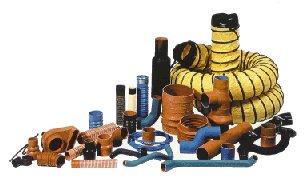
<p><span class="full-image-float-right ssNonEditable"><span><img src="http://www.novasim.com/storage/case-studies/Flexfab1.jpg?__SQUARESPACE_CACHEVERSION=1254851446193" alt="" /></span></span>In an effort to reduce setup times on key extrusion equipment and balance thier product mix of high volume products and low volume specialty products, Flexfab of Hasting, Michigan looked to SIMUL8 and NovaSim for a solution.</p>]]></summary></entry><entry><title>Surgical Scheduling</title><category term="Capacity Planning"/><category term="Cost Reduction"/><category term="Health Care"/><category term="Human Services Delivery"/><category term="Planning and Scheduling"/><id>http://www.novasim.com/case-studies-journal/surgical-scheduling.html</id><link rel="alternate" type="text/html" href="http://www.novasim.com/case-studies-journal/surgical-scheduling.html"/><author><name>NovaSim</name></author><published>2009-10-06T16:19:34Z</published><updated>2009-10-06T16:19:34Z</updated><summary type="html" xml:lang="en-US"><![CDATA[<h3>Hunter New England Area Health Service</h3>
<p>Hunter New England Area Health Service is a large governmental health services organization in New South Wales, Australia. Serving approximately 850,000 people, the HNEAHS includes 3 teriary hospitals, 4 rural referral hospitals, 12 district hospitals and 10 community hospitals. NovaSim, working together with PricewaterhouseCoopers Australia, developed a comprehensive simulation model to help manage surgical block management and overall waitlist management for two of the largest facilities in the region. Used to solve a variety of what-if questions when it was first developed, the model remains in consistent use several years later as an ongoing wait list management tool.&nbsp;</p>]]></summary></entry><entry><title>Simulating the Johns Hopkins Comprehensive Transplant Center</title><category term="Capacity Planning"/><category term="Health Care"/><id>http://www.novasim.com/case-studies-journal/simulating-the-johns-hopkins-comprehensive-transplant-center.html</id><link rel="alternate" type="text/html" href="http://www.novasim.com/case-studies-journal/simulating-the-johns-hopkins-comprehensive-transplant-center.html"/><author><name>NovaSim</name></author><published>2009-10-02T00:15:06Z</published><updated>2009-10-02T00:15:06Z</updated><summary type="html" xml:lang="en-US"><![CDATA[<h3>Johns Hopkins Medical Institute</h3>
<p>The number of chronic disease cases is growing at phenomenal rates as our general population ages. End-stage diseases of all the major organs: heart, lung, liver, kidney and pancreas ultimately rely on transplantation as the only means remaining to return a patient to reasonable health. <br /><br /></p>
<h3><span class="full-image-float-left ssNonEditable"><span><img src="http://www.novasim.com/storage/case-studies/iStock_000002722450XSmall.jpg?__SQUARESPACE_CACHEVERSION=1254849570760" alt="" /></span></span></h3>
<p>Because of this growth in demand, the line of patients waiting to receive organ transplants is seemingly endless. Aside from the fact that there are not enough organs being donated to meet this need, the transplant community's next biggest problem is having sufficient resources to meet the increasing demand.</p>]]></summary></entry><entry><title>Reducing Cycle Times: Evaluating the American Red Cross' Blood Donor Testing Process</title><category term="Capacity Planning"/><category term="Cycle Time Reduction"/><category term="Process Industry"/><id>http://www.novasim.com/case-studies-journal/reducing-cycle-times-evaluating-the-american-red-cross-blood.html</id><link rel="alternate" type="text/html" href="http://www.novasim.com/case-studies-journal/reducing-cycle-times-evaluating-the-american-red-cross-blood.html"/><author><name>NovaSim</name></author><published>2009-09-30T19:26:03Z</published><updated>2009-09-30T19:26:03Z</updated><summary type="html" xml:lang="en-US"><![CDATA[<h3>American Red Cross</h3>
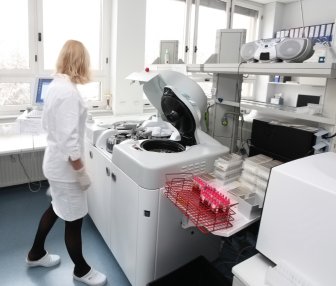
<p>In the  United States, someone needs blood approximately every two seconds. With the  American Red Cross providing 50% of this supply, this translates to 6.9 million  samples being tested each year. In 1991, the American Red Cross consolidated its  network of 53 original Red Cross testing laboratories into nine state-of-the-art  facilities. Implementation of standardized operating procedures, training and  equipment at the nine National Testing Laboratories (NTLs) improved quality  control, facilitated the adoption of new technology, and maximized sample flow  and flexibility. Currently, ninety-five percent of all blood is tested within 15  hours from the time the blood samples are received by the NTL; 99 percent of all  blood is tested within 24-hours. In an effort to both improve on this high  service standard and lower costs, the National Testing and Reference Laboratory  Headquarters looked to simulation as a potential tool.</p>
<p><span class="full-image-block ssNonEditable"><span><img src="http://www.novasim.com/storage/case-studies/Lab2.jpg?__SQUARESPACE_CACHEVERSION=1254850094240" alt="" /></span></span></p>]]></summary></entry></feed>